NFHS Volleyball Rules 2023: A Comprehensive Guide & PDF Download
Navigating the 2023 NFHS volleyball season? This guide provides essential rule information and direct links to officially download the 2023-2024 NFHS Volleyball Rule Book․
Access the complete ruleset, case book, and officials manual via the National Federation of State High School Associations (NFHS) and Amazon․com․
Welcome to the 2023 NFHS Volleyball Rules – a season marked by exciting changes designed to enhance gameplay and clarity․ These rules, meticulously crafted by the National Federation of State High School Associations (NFHS), govern scholastic volleyball across the nation, ensuring fair competition and athlete safety․ Understanding these regulations is crucial for players, coaches, officials, and fans alike․
This year introduces significant modifications, most notably the implementation of the two-libero rule, allowing teams greater defensive flexibility․ Furthermore, prospective changes regarding ball surface textures are slated for consideration beginning with the 2026-27 school year, potentially impacting equipment standards․
The official rule book, available for download and purchase, details every aspect of the game, from scoring procedures and rotation guidelines to service regulations and player conduct expectations․ Resources from the University Interscholastic League (UIL) and the Texas Association of Sports Officials (TASO) provide further support for Texas-based volleyball communities․ Staying informed about these rules is paramount for a successful and enjoyable volleyball experience․
Where to Download the Official 2023 NFHS Volleyball Rules PDF
Accessing the official 2023 NFHS Volleyball Rules PDF is straightforward, ensuring coaches, officials, and enthusiasts have readily available access to the complete regulations․ The primary source for the official rulebook is the National Federation of State High School Associations (NFHS) website; Look for a clearly marked link, often found in the “Volleyball” section of their sports catalog․
Alternatively, you can conveniently purchase a physical copy or digital version of the 2023-2024 NFHS Volleyball Official Rule Book through major online retailers like Amazon․com․ This includes access to the accompanying case book and officials manual, providing detailed interpretations and guidance․
The Texas Association of Sports Officials (TASO) website also provides links and resources for accessing the NFHS rules, specifically tailored for Texas high school volleyball․ Remember to verify you are downloading the most current edition – the 2023-2024 version – to ensure compliance with the latest regulations․ Direct links are often available on the TASO page, simplifying the download process․
Key Changes in the 2023 NFHS Volleyball Rules
The most significant update in the 2023 NFHS Volleyball Rules is the implementation of the two-libero rule․ Teams are now permitted to utilize up to two liberos during each set, offering increased defensive flexibility and strategic options․ This change aims to enhance gameplay and provide more opportunities for specialized players․
However, a noteworthy rule change isn’t immediate․ Beginning with the 2026-2027 school year, state associations will have the option to adopt the use of non-smooth or textured volleyball surfaces․ This potential shift is being considered to influence ball control and gameplay dynamics, but its implementation is still pending state-level decisions․
These changes reflect the NFHS’s ongoing commitment to evolving the sport while prioritizing player safety and fair play․ Coaches and officials should carefully review the complete 2023-2024 rulebook to fully understand these modifications and their implications for competition․ Staying informed is crucial for a smooth and compliant volleyball season․
The Two-Libero Rule Implementation
The introduction of the two-libero rule marks a substantial shift in defensive strategies for the 2023 NFHS volleyball season․ Previously limited to a single libero, teams can now designate two players with specialized defensive roles, enhancing their back-row coverage and ball-control capabilities․
Both liberos must adhere to all existing libero restrictions, including wearing contrasting jerseys and being restricted to back-row play․ They can be substituted for each other freely, without counting as a regular substitution․ This allows for continuous defensive adjustments without impacting the team’s substitution count․
This rule change is expected to increase the pace of play and provide coaches with greater tactical flexibility․ It allows for specialized defensive pairings and the ability to quickly adapt to opposing hitters․ Understanding the nuances of this rule, including proper substitution procedures and libero limitations, is vital for coaches, players, and officials alike․ Detailed clarification can be found within the official 2023-2024 NFHS Volleyball Rule Book․
Changes Regarding Non-Smooth/Textured Ball Surfaces (Effective 2026-27)
A significant, future-focused rule change concerns volleyball ball surfaces․ While not immediately implemented, beginning with the 2026-27 school year, state associations will have the option to permit the use of volleyballs featuring non-smooth or textured surfaces․ This potential shift acknowledges advancements in ball technology and aims to explore the impact of different surface textures on gameplay․
Currently, NFHS rules mandate a smooth leather or synthetic leather cover․ The upcoming change allows for experimentation with balls designed to enhance grip, control, or spin․ However, it’s crucial to understand this is not a nationwide mandate; individual state associations will decide whether to adopt the rule․
This change is being carefully considered to assess its effect on player safety, skill development, and the overall competitive balance of the sport․ Coaches and players should monitor updates from their state associations regarding the adoption of this rule․ Further details and clarifications will be available in future NFHS rule publications and guidelines․
Understanding Scoring and Sets
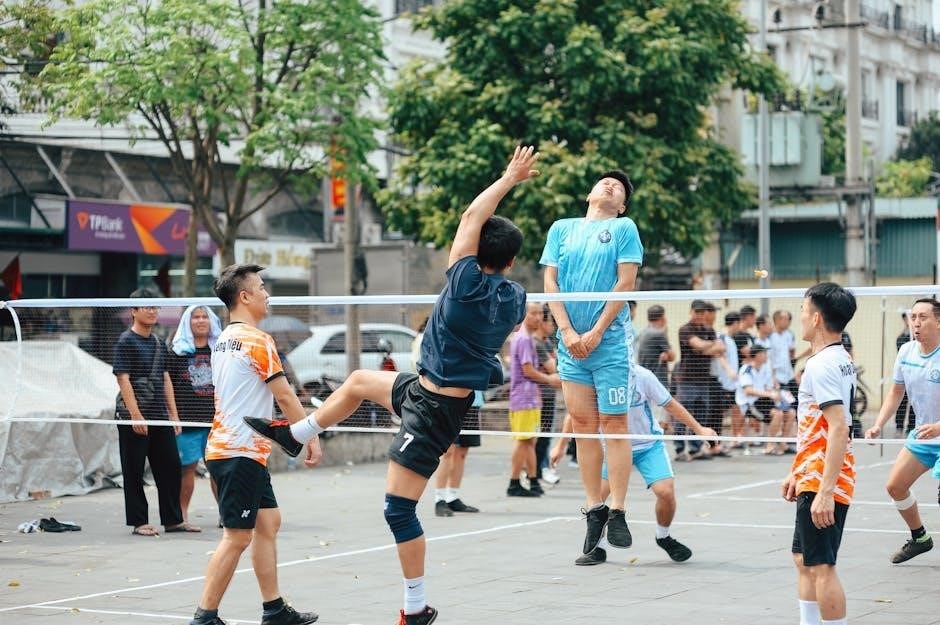
The NFHS volleyball scoring system utilizes rally scoring, meaning a point is awarded on every rally, regardless of which team served․ Matches are typically best-of-five sets, though this can vary based on tournament or league rules․ A set is won by the first team to reach 25 points, with a minimum two-point advantage required․ For example, a set cannot end at 25-24; play continues until one team leads by two (e․g․, 27-25)․
The fifth set, if necessary, is played to 15 points, also requiring a two-point lead․ This shortened deciding set adds intensity and ensures a conclusive match outcome․ Understanding these scoring parameters is fundamental for players, coaches, and officials alike․
Detailed explanations of scoring procedures, including tie-breaking situations and potential rule interpretations, are comprehensively outlined within the official 2023-2024 NFHS Volleyball Rule Book․ Accessing this resource is vital for ensuring accurate application of the rules during competition and fostering fair play․
Rotation and Player Positioning Rules
Proper rotation is crucial in NFHS volleyball, ensuring all players participate in both front-row and back-row positions․ Following a side-out, the team rotates clockwise, shifting each player one position․ This systematic movement guarantees equitable playing time and prevents any single player from dominating a specific role throughout the set․
Positioning rules dictate that front-row players must be aligned along the attack line when the server contacts the ball․ Back-row players cannot complete an attack hit from in front of the attack line․ These regulations promote strategic gameplay and prevent unfair advantages․ Understanding these positional constraints is essential for effective team coordination․
The official 2023-2024 NFHS Volleyball Rule Book provides detailed diagrams and explanations of rotation sequences and permissible player positioning․ Consulting this resource is paramount for coaches and players to master these fundamental aspects of the game and avoid penalties during matches․
Service Rules: Legal and Illegal Serves
The serve initiates each rally in volleyball, governed by specific NFHS rules․ A legal serve requires the server to contact the ball while standing behind the end line and within the designated serving area․ The ball must clear the net without touching it and land within the boundaries of the opponent’s court․

Several actions constitute an illegal serve․ These include foot faults (stepping on or over the end line during the serve), throwing the ball and striking it, or serving before the referee’s whistle․ Any violation results in a point for the opposing team․ Consistent adherence to these rules is vital for fair play․
The 2023-2024 NFHS Volleyball Rule Book comprehensively details legal serving techniques, prohibited actions, and referee signals for service faults․ Coaches and players should thoroughly review this document to ensure compliance and avoid costly errors during competition․ Mastering the service rules is fundamental to a successful volleyball strategy․
Blocking Regulations: Individual and Team Blocks
Blocking is a crucial defensive skill in volleyball, aiming to intercept the opponent’s attack․ NFHS rules govern individual and team blocking actions, ensuring fair play and player safety․ Blockers may reach beyond the net, provided they do not contact the ball in the opponent’s space before the attacker makes contact․
A complete block occurs when the ball is deflected by one or more players and remains on the blocker’s side of the net․ A partial block happens when the ball is touched by a blocker but continues into the opponent’s court․ Both contribute to defensive success․
The 2023-2024 NFHS Volleyball Rule Book provides detailed explanations of blocking rules, including restrictions on back-row blockers and penalties for illegal blocks․ Understanding these regulations is essential for players and coaches to maximize blocking effectiveness and avoid rule violations․ Proper blocking technique and adherence to NFHS guidelines are key to a strong defensive strategy․
Attacking Rules: Hitters and Restrictions
Effective attacking is vital for scoring in volleyball, but NFHS rules impose specific restrictions on hitters; Players can attack the ball from anywhere on their side of the net, utilizing various hitting techniques․ However, back-row players face limitations; they cannot complete an attack jump from inside the attack line (10-foot line) when in front of it․
This rule prevents back-row players from illegally blocking or attacking near the net․ A legal attack requires the hitter to jump from behind the attack line or land behind it after completing their attack․ Violations result in a point for the opposing team․
The 2023-2024 NFHS Volleyball Rule Book comprehensively details attacking regulations, including permissible hitting zones and penalties for illegal attacks․ Coaches and players must thoroughly understand these rules to optimize offensive strategies and avoid costly errors․ Mastering legal attacking techniques is crucial for maximizing scoring opportunities and maintaining a competitive edge․
Net Faults and Boundary Violations
Maintaining spatial awareness is critical in volleyball, particularly concerning net faults and boundary violations․ A net fault occurs when a player touches the net between the antennae while the ball is in play․ Any contact, even incidental, results in a point for the opposing team․ Players must avoid any net interference during rallies․
Boundary violations happen when the ball lands completely outside the designated court boundaries․ Lines are considered in, meaning if a portion of the ball’s circumference touches the line, it’s deemed a legal landing․ Stepping completely over the center line under the net is also a fault, disrupting the opponent’s space․
The official 2023-2024 NFHS Volleyball Rule Book provides detailed diagrams and explanations of court boundaries and net fault regulations․ Understanding these rules is essential for players, referees, and coaches to ensure fair play and accurate scoring․ Avoiding these faults minimizes errors and maximizes scoring opportunities․
Player Conduct and Penalties
Maintaining sportsmanship is paramount in NFHS volleyball․ The 2023 rules emphasize respectful conduct towards opponents, officials, and teammates․ Unsportsmanlike behavior, including excessive arguing, taunting, or abusive language, will not be tolerated․ Referees have the authority to issue warnings, yellow cards (caution), and red cards (expulsion)․
A yellow card serves as a formal warning; a second yellow card to the same player results in a red card and penalty․ A red card leads to point/rally deduction for the offending team and potential suspension from the set or match․ Deliberate contact with an official or aggressive physical actions warrant immediate red card issuance․
The official 2023-2024 NFHS Volleyball Rule Book details specific penalties for various misconducts․ Coaches are responsible for promoting positive behavior among their players․ Understanding these rules ensures a fair and respectful competitive environment․ Penalties are applied consistently to uphold the integrity of the game․
Libero Specific Rules and Responsibilities
A significant change in 2023 is the implementation of the two-libero rule․ Teams can now utilize up to two liberos per set, enhancing defensive flexibility․ However, liberos maintain specific restrictions․ They must wear contrasting jerseys and are confined to the back row․ Libero substitutions don’t count against team substitution limits․

Libero’s cannot attack the ball above the height of the net, block, or complete an attack hit from the front row․ They can only set using a forearm pass, and that set cannot be an overhand finger action set in front of the attack line․ Proper libero play requires precise positioning and quick reactions․
The 2023-2024 NFHS Volleyball Rule Book provides detailed guidelines on libero responsibilities, including legal and illegal actions․ Coaches must clearly communicate these rules to their liberos; Mastering the libero role is crucial for maximizing defensive efficiency and strategic gameplay․
Official Signals Used by Volleyball Referees
Clear communication is paramount in volleyball, and referees utilize a standardized set of signals to convey decisions․ These signals, detailed in the 2023-2024 NFHS Volleyball Rule Book, ensure consistency and understanding for players and coaches․ Signals cover a wide range of infractions, including net faults, boundary violations, and illegal hits․
Referees use distinct hand and arm movements to indicate penalties like double contacts, lifts, and illegal blocks․ Proper signal execution is vital for maintaining game control and preventing disputes․ Understanding these signals allows players to quickly recognize errors and adjust their gameplay accordingly․
The NFHS rule book includes visual diagrams illustrating each signal, aiding in accurate interpretation․ Consistent application of these signals by officials is essential for fair play and a positive competitive environment․ Familiarizing yourself with these signals enhances your overall volleyball knowledge․
Definitions of Common Volleyball Terms
Volleyball boasts a unique lexicon, and a firm grasp of key terms is crucial for players, coaches, and fans alike․ The 2023-2024 NFHS Volleyball Rule Book provides comprehensive definitions for commonly used terms, ensuring a shared understanding of the game’s nuances․ These definitions clarify concepts often debated or misunderstood․
Terms like “attack,” “block,” “dig,” and “set” are precisely defined, outlining the specific actions and requirements for each skill․ Understanding distinctions between legal and illegal hits, as well as the rules governing the libero’s actions, is vital․ The rule book also clarifies terminology related to scoring, rotation, and player positioning․

Accessing the official NFHS rule book is the best way to ensure accurate interpretation of these terms․ Consistent use of these definitions promotes clear communication and fair play․ Mastering volleyball terminology enhances your appreciation and understanding of this dynamic sport․
Rule 8: Blocking Rules in Detail
Blocking is a critical skill in volleyball, and NFHS Rule 8 outlines specific regulations governing this defensive action․ The 2023-2024 NFHS Volleyball Rule Book details permissible blocking techniques, emphasizing the importance of legal contact and avoiding interference with the opponent’s attack․
Key aspects covered include the timing of blocks – a blocker may not contact the ball in the opponent’s space before the attacker makes contact․ Rules also address back-row blocking restrictions, specifying which players are permitted to participate in blocking actions․ Understanding these limitations is crucial for avoiding penalties․
The rule book clarifies the legality of reaching over the net during a block, ensuring it doesn’t interfere with the attacker’s hitting motion․ Detailed diagrams and case studies within the official NFHS publication illustrate proper blocking technique and potential rule violations․ Accessing the complete rule book provides a thorough understanding of these complex regulations․
Rule 10: Replays and Procedures
Rule 10 of the NFHS Volleyball Rule Book meticulously details the procedures for replays, addressing situations requiring official review․ These scenarios often involve uncertainty regarding point scoring, boundary violations, or illegal contacts․ The 2023-2024 rulebook emphasizes consistent application of replay protocols to ensure fair play․
The procedures outline the roles of the officials involved – the first referee, second referee, and line judges – in initiating and conducting a replay․ Specific guidelines govern the use of video replay technology, if available, and the criteria for overturning a previous call․ Clear communication between officials is paramount during replay reviews․
The rulebook clarifies that replays are limited to specific situations and cannot be used to challenge judgment calls․ Detailed case plays illustrate how replay procedures should be applied in various game scenarios․ A comprehensive understanding of Rule 10, found within the official NFHS publication, is vital for accurate officiating and maintaining game integrity․
Rule 12: Libero Rules – Expanded Explanation
Rule 12 of the NFHS Volleyball Rule Book provides a detailed explanation of the libero’s unique role and responsibilities․ A significant change for 2023 allows teams to utilize two liberos per set, enhancing defensive flexibility․ This expansion necessitates a thorough understanding of the rules governing libero substitutions and restrictions․

The rulebook clarifies the libero’s limitations regarding attacking, blocking, and setting from the front zone․ Specific guidelines detail the proper procedures for libero replacements, including restrictions on when and how substitutions can occur․ The libero’s uniform requirements are also clearly outlined to ensure easy identification by officials and opponents․
Furthermore, Rule 12 addresses scenarios involving libero misconduct and penalties․ A comprehensive grasp of these regulations, as detailed in the official 2023-2024 NFHS Volleyball Rule Book, is crucial for coaches, players, and officials to ensure fair and consistent application of the libero rules throughout the match․
Resources for Texas High School Volleyball Officials (UIL & TASO)

Texas high school volleyball officials benefit from dedicated resources provided by the University Interscholastic League (UIL) and the Texas Association of Sports Officials (TASO)․ The UIL serves as the governing body for Texas high school athletics, offering access to NFHS volleyball rules information and updates․
TASO is a crucial partner, providing training, certification, and support for volleyball officials across the state․ Their website features valuable resources, including rule interpretations, clinics, and communication forums․ Officials can access the latest rule changes and interpretations published by the NFHS through both the UIL and TASO platforms․
For Texas officials, staying current with the 2023 NFHS Volleyball Rule Book is paramount․ Both organizations offer avenues for professional development and ensure consistent rule enforcement throughout Texas high school volleyball competitions․ Accessing the official rule book and related materials is essential for maintaining officiating standards․
Purchasing the 2023-2024 NFHS Volleyball Official Rule Book
For coaches, officials, and volleyball enthusiasts seeking a comprehensive reference, the 2023-2024 NFHS Volleyball Official Rule Book is readily available for purchase․ This essential resource provides detailed rules, diagrams, and case plays to ensure accurate interpretation and application of the game’s regulations․
Amazon․com offers a convenient platform to acquire the official rule book in paperback format, directly from the National Federation of State High School Associations (NFHS)․ This physical copy allows for easy navigation and quick reference during practices, games, and training sessions․
Alongside the rule book, the NFHS also publishes the 2023-2024 NFHS Volleyball Official Case Book and Officials Manual, providing further clarification and guidance․ Investing in these resources demonstrates a commitment to understanding and upholding the integrity of high school volleyball․ Ensure you have the latest edition for the most accurate information․